
WELCOME BONUS 300%
UP TO €2000 + 100
FREE SPINS
UP TO €2000 + 100
FREE SPINS
Home → Games
Casino games at 888Starz
Double Down: Doubling Your Bet After Two Cards
The Double Down feature in Blackjack Liberal Vegas Strip allows players to double their initial wager after receiving the first two cards. This strategic option is permitted on any two-card total, provided the dealer stands on Soft 17 and doubling after split is allowed. The decision significantly impacts the long-term return, as it increases exposure during favorable counts.
Standard deviation for this game sits at 1.15, indicating moderate volatility compared to other table games. Doubling down effectively amplifies the house edge of 0.28% on the doubled portion of the bet. Players must adhere strictly to basic strategy to maximize the benefit of this rule set.
This maneuver contributes only 10% toward the 300% welcome bonus up to €2,000 wagering requirement. Slots count for 100%, making them a more efficient path to clearing the bonus funds. Table game players should anticipate slower progress in meeting the turnover conditions.
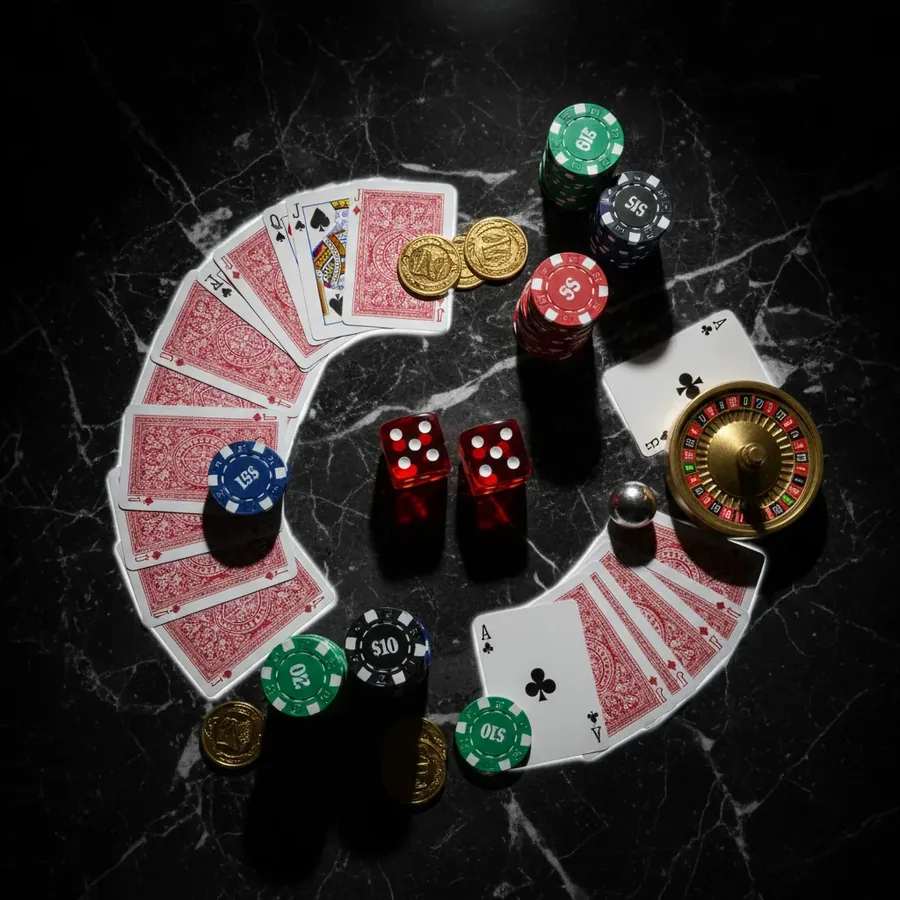
37 vs. 38 Sectors: What the Double Zero Costs
Roulette Europäisch features 37 sectors consisting of numbers 1 through 36 plus a single zero. This configuration yields an RTP of 97.30% with a constant house edge of 2.70% across all bet types. Payouts remain fixed at standard ratios like 35:1 for straight bets regardless of the sector count.
In contrast, American Roulette typically includes 38 sectors by adding a double zero, which drastically reduces player odds. The French variant with La Partage further improves odds to 98.65% for even-money bets.
La Partage refunds half the stake on even-money wagers when the ball lands on zero. This rule applies specifically to Red/Black, Odd/Even, and Low/High bets. Inner bets such as Straight or Split do not qualify for this partial refund mechanism.
The 2.70% house edge on European Roulette means the casino retains €2.70 per €100 wagered over time. This rate is significantly higher than the 1.35% edge found in French Roulette with En Prison rules. Players seeking lower costs should prioritize tables offering special refund mechanisms.
Blackjack flow: cards, decision, payout 3:2
Blackjack Liberal Vegas Strip offers the most favorable rule combination including Soft 17 stand, Double After Split, and Late Surrender. These liberal conditions result in an exceptional RTP of 99.72% and a minimal house edge of just 0.28%. The payout structure maintains the classic 3:2 ratio for natural blackjacks.
Replacing the 3:2 payout with 6:5 adds exactly 1.39 percentage points to the house advantage. A six-deck shoe with 6:5 payouts yields an RTP of 98.15% and a house edge of 1.85%. On a $10 bet, a blackjack pays $12 instead of the standard $15, substantially reducing player returns.
The flow involves the dealer checking for blackjack before players act if their upcard is an Ace. Insurance bets carry a high house edge of 7.47% and should generally be avoided by non-counters. The base strategy accounts for these specific rules to minimize losses over thousands of hands.
This specific game variant contributes merely 10% toward the 300% welcome bonus up to €2,000 turnover. Clearing the bonus using table games requires significantly higher volume compared to slot play. Players should calculate the effective cost of wagering based on the contribution percentage.
When is Splitting Aces and Eights Sensible?
Splitting Aces and Eights is a fundamental tenet of basic strategy in Blackjack Liberal Vegas Strip. Aces are split to maximize the potential for hitting multiple blackjacks, while eights mitigate the risk of busting from a hard sixteen. The liberal ruleset supports these moves without restriction.
The house edge of 0.28% assumes perfect adherence to these splitting guidelines. Deviating from this strategy, such as refusing to split eights against a dealer seven, increases the expected loss per hand. Consistency in application is key to preserving the theoretical return.
Late surrender is available but does not replace the necessity of splitting weak hands like sixteen. Surrendering forfeits half the bet immediately, whereas splitting offers two chances to improve. The standard deviation of 1.15 reflects the variance inherent in these decisions.
Wagering on these strategies counts only 10% toward the 300% welcome bonus up to €2,000 requirement. This low contribution rate makes table games less efficient for bonus conversion than slots. Players must account for this factor when planning their gameplay rotation.
Split, Double, and Surrender: Three Decisions Explained
Splitting pairs allows players to separate identical ranks into two independent hands, each requiring a matching bet. In Blackjack Liberal Vegas Strip, doubling after split is permitted, enhancing the flexibility of this move. The house edge of 0.28% relies heavily on optimal execution of these splits.
Double Down permits doubling the original wager after the initial deal, usually on totals of nine, ten, or eleven. This action is crucial for maximizing value when the dealer shows a weak upcard. The rule set allows doubling on any two cards, providing broader opportunities than restrictive variants.
Late Surrender lets players forfeit half their bet after the dealer checks for blackjack. This rule modifier improves the RTP by approximately 0.08 percentage points. Early surrender is far more valuable but rarely offered in modern online environments.
All three decisions fall under the table game category contributing 10% to the 300% welcome bonus up to €2,000 wagering. Achieving the required turnover demands substantial volume compared to 100% contributing slots. Understanding these mechanics helps manage expectations regarding bonus clearance speed.
Game categories at a glance
| Category | Examples | Stakes From | Highlight |
|---|---|---|---|
| Slots | Valley of the Gods, Sweet Bonanza, Book of Demi Gods 2 | 0,10 EUR | thousands of titles |
| Table games | Roulette, Blackjack, Baccarat | 0,50 EUR | classic rules |
| Live casino | XXXtreme Lightning Roulette, Ultimate Roulette | 0,20 EUR | real dealers |
| Jackpot games | Mega Moolah, Divine Fortune, Age of the Gods | 0,20 EUR | progressive pools |
| Instant games | Aviator, Plinko, Mines | 0,10 EUR | fast rounds |
| Video poker | Jacks or Better, Deuces Wild | 0,25 EUR | strategy based |
Four Blackjack Hand Decisions at a Glance
The RTP of the standard 6-deck game is 99.54%, yielding a house edge of 0.46% under strict basic strategy. This mathematical baseline assumes perfect adherence to rules like doubling on any two cards and standing on soft 17. Players deviating from this optimal path immediately surrender their expected return, turning a favorable game into a losing proposition.
Insurance represents a separate side bet with a significantly lower RTP of 92.53% and a 7.47% house advantage. The casino allows wagers up to 50% of the original stake when the dealer shows an ace. Accepting this offer guarantees a long-term loss for anyone not utilizing advanced card counting techniques.
Blackjack paying 6:5 instead of the standard 3:2 drastically increases the house edge to 1.85%. This single rule change adds exactly 1.39 percentage points to the casino's advantage over the standard 0.46% baseline. A player betting 10 euros receives only 12 euros for a natural hand instead of the customary 15.
Late surrender reduces the overall house edge by approximately 0.08 percentage points by allowing players to forfeit half their bet after the dealer checks for blackjack. This rule modifier improves the RTP slightly compared to games without this option. It remains a valuable tool for minimizing losses on statistically weak starting hands.
Read Statistics of Last 500 Rounds Correctly
Roulette European wheels feature 37 sectors including a single zero, establishing a constant house edge of 2.70% across all bet types. The payout structure mirrors a 36-number wheel, ensuring the casino retains its statistical advantage regardless of the wager placed. Short-term results may vary wildly, but the mathematical expectation remains fixed at -2.70% per euro wagered.
Baccarat offers distinct probabilities for its three main outcomes, with the Player bet carrying a 1.24% house edge and a 98.76% RTP. The Banker bet provides a superior 1.06% edge due to a 5% commission on wins, resulting in an effective payout of 0.95:1. These figures represent the theoretical long-run average over hundreds of thousands of rounds, not session forecasts.
Tie bets in Baccarat present a catastrophic house edge of 14.36% when paying 8:1, making them the worst primary wager available. Even with the common online adjustment of 9:1, the edge remains high at 4.84%, still far inferior to the Banker or Player options. Wagering on ties systematically erodes bankrolls through negative expected value.
Sic Bo Small and Big bets cover sums of 4-10 and 11-17 respectively, carrying a 2.78% house edge under Atlantic City rules. Triples cause both bets to lose, maintaining the casino's advantage across these even-money propositions. Players should recognize that this 2.78% figure applies uniformly to every unit staked on these specific market ranges.
When to Surrender 16 vs 10?
Late surrender permits players to forfeit their hand after the dealer verifies they do not hold a natural blackjack. This action returns exactly 50% of the original stake, limiting the maximum loss on that specific round. The rule effectively reduces the house edge by 0.08 percentage points, providing a marginal but consistent mathematical benefit.
Comparing the expected value of hitting versus surrendering against a dealer ten reveals that surrendering is the superior strategic choice. Hitting 16 against a ten exposes the player to a high probability of busting, which guarantees a total loss of the wager. Forfeiting half the stake preserves capital better than attempting to draw a single card to improve the hand.
The availability of late surrender distinguishes favorable table conditions from those lacking this player-friendly modification. Games without surrender force players to hit or stand on all hands, increasing the overall house advantage. Utilizing this rule correctly transforms a potentially devastating loss into a manageable partial deficit.
Early surrender is significantly more valuable, reducing the edge by up to 0.6 percentage points, but it is extremely rare in modern casinos. Most platforms only offer late surrender, which occurs after the dealer checks for blackjack. Players must adjust their expectations accordingly, as the earlier timing of early surrender provides substantially greater protection.
Declining Insurance: The Most Common Blackjack Mistake
Insurance is a side bet offered when the dealer shows an ace, costing up to 50% of the original wager. This separate proposition pays 2:1 if the dealer possesses a ten-value hole card, forming a natural blackjack. However, the standalone RTP for this bet is merely 92.53%, indicating a steep house edge of 7.47%.
Basic strategy dictates always declining insurance because the 7.47% disadvantage vastly exceeds the main game's 0.46% edge. Accepting the bet turns a low-volatility game into a high-cost trap that drains bankrolls rapidly. The mathematical expectation proves that paying for insurance is financially ruinous for average players.
Card counters may occasionally accept insurance when the true count reaches +3 or higher, where the odds shift in their favor. This exception requires precise tracking of remaining deck composition, a skill beyond the scope of casual play. For the vast majority of users, refusing this offer remains the only mathematically sound decision.
The variance associated with insurance bets is considerably higher than standard blackjack actions due to the 2:1 payout structure. While the potential reward appears attractive, the underlying probability of winning does not justify the risk. Consistent refusal of this side bet preserves the integrity of the base game strategy.
9/6 table: nine for Full House, six for Flush
Video Poker Deuces Wild NSUD features a specific paytable where Five of a Kind pays 16 coins and Straights pay 2 coins. This configuration differs from full-pay versions, resulting in a slightly lower RTP of 99.73% compared to the ideal 99.76% standard. The game maintains a low house edge of 0.27% despite these adjustments.
The term 9/6 typically refers to Jacks or Better tables paying nine coins for a Full House and six for a Flush. Such combinations yield an exceptional 99.54% RTP, rivaling the best blackjack rules found in regulated markets. Players seeking optimal returns must verify the paytable before sitting down, as slight reductions drastically alter profitability.
Standard deviations in Video Poker are generally lower than in slots due to the deterministic nature of five-card draws. The NSUD variant exhibits volatility characteristics similar to other Deuces Wild games, requiring sufficient bankroll to withstand downswings. Understanding these statistical properties helps manage expectations during extended play sessions.
Wagering contributions for table games like Blackjack and Roulette are capped at 10% toward bonus turnover requirements. Slots contribute 100%, making them the primary vehicle for clearing promotional funds. Players using video poker to clear bonuses must calculate the inflated turnover target resulting from the reduced contribution rate.
What Doesn't Count Towards Bonus Wagering on Table Games?
Tischspiele contribute only 10% toward the wagering requirement for the 300% welcome bonus up to €2,000 plus 100 free spins, meaning players must generate significantly higher turnover than with slots. Slots count at 100%, so a €100 table bet equals just €10 of progress, whereas the same amount in slots provides full credit toward clearing the bonus funds efficiently. This discrepancy forces players to choose high-volume slot sessions if they intend to convert the bonus into withdrawable cash without excessive risk exposure.
Craps Don't Pass offers an RTP of 98.64% and a house edge of 1.36%, yet its low contribution rate makes it inefficient for bonus clearance compared to high-variance slots. The 1:1 payout structure limits the speed of turnover generation, requiring much larger total bets to meet the multiplier attached to the €2,000 maximum bonus limit. Players relying on this game will find their bankroll depleted faster due to the slow accumulation of wagering credits despite the favorable mathematical odds.
Sic Bo Small or Big bets provide an RTP of 97.22% with a house edge of 2.78%, but the 10% contribution rule severely penalizes strategic play during bonus periods. Each €100 wagered yields only €10 toward the required turnover, forcing players to place ten times more bets than slot players to achieve the same clearance status. This structural disadvantage highlights why table games are often excluded from efficient bonus conversion strategies despite their lower variance profiles.
Craps Odds Bet with 0 Percent House Edge
The Craps Don't Pass line carries a house edge of 1.36% with an RTP of 98.64%, forming the foundation for subsequent odds bets that carry zero additional vigorish. When a point is established, players can take odds behind their pass line wager, which pays true odds without any casino margin added to the payout structure. This unique feature allows skilled players to reduce the overall effective house edge below the standard 1.36% baseline by increasing the proportion of edge-free money in play.
Standard deviation for Craps Don't Pass stands at 0.99 per roll, indicating moderate volatility that suits steady bankroll management during extended gaming sessions. The push condition on 12 (and sometimes 2) further protects the player's capital by returning the original stake rather than collecting it as a loss event. This mechanical advantage complements the zero-edge odds bet, creating a combined betting strategy that minimizes long-term theoretical losses while maximizing playing time.
Each additional dollar placed on odds reduces the overall house edge percentage because the main bet remains fixed while the zero-edge portion increases. For example, a $10 Don't Pass bet with $20 odds results in a total risk of $30, but only $10 is subject to the 1.36% house advantage. This mathematical reality makes craps one of the most player-friendly table games available when optimal betting structures are employed consistently over time.
Submit documents no older than three months
KYC verification requires identity documents issued within the last three months to ensure current personal details match the account holder's official records accurately. Financial institutions and regulatory bodies mandate recent documentation to prevent fraud and maintain compliance with anti-money laundering standards across all online gambling platforms. Players failing to provide updated identification face immediate suspension of withdrawal privileges until valid proof of address and identity are submitted successfully.
Roulette Französisch inner bets pay Straight 35:1, Split 17:1, and Street 11:1, but these payouts are irrelevant until the account passes strict document verification procedures. The house edge remains constant at 2.70% regardless of verification status, yet unverified accounts cannot access real-money gameplay or withdraw any winnings accumulated during testing phases. This security measure protects both the operator and the player from unauthorized account usage or identity theft attempts.
Baccarat Banker bets yield an RTP of 98.94% with a 1.06% house edge after the 5% commission is applied, but withdrawals require fully verified KYC status first. The 0.95:1 effective payout structure assumes legitimate player participation, which can only be confirmed through submission of government-issued ID and utility bills dated within ninety days. Delaying document submission prolongs account restriction periods and prevents access to the full range of available table games and promotional offers.
Pass Line in Craps: Process in Four Steps
Step one involves placing the initial Don't Pass wager before the shooter rolls the dice, establishing the base bet subject to a 1.36% house edge. The player wins immediately if the come-out roll results in 2 or 3, while rolling 7 or 11 also constitutes an instant victory for the don't bettor. This opening phase determines whether the round ends quickly or proceeds to point establishment, setting the stage for subsequent odds betting opportunities.
Step two occurs when the come-out roll establishes a point number such as 4, 5, 6, 8, 9, or 10, triggering the need for continued action. The shooter continues rolling until either the point number repeats (loss for Don't Pass) or a 7 appears (win for Don't Pass). This intermediate phase introduces higher volatility as the outcome depends entirely on future roll probabilities rather than the initial come-out result.
Step three allows players to add odds bets behind their original Don't Pass wager once a point is established, reducing the overall house edge significantly. These odds bets pay true odds without any casino margin, making them mathematically superior to the base bet which carries the standard 1.36% advantage. Combining these elements creates a layered betting strategy that maximizes expected value while minimizing long-term theoretical losses across multiple rounds.
Step four concludes the round when either the point number or a 7 is rolled, resolving all outstanding wagers including any attached odds bets. Winners receive payouts based on the specific odds associated with the established point number, while losers forfeit both the base bet and any additional odds amounts. This finalization process resets the table state, allowing new come-out rolls to begin with fresh betting opportunities for all participants present.
Dozen 2:1 Hits 12 of 37 Numbers
Roulette Französisch inner bets include Dozen 2:1 wagers that cover twelve numbers out of thirty-seven total sectors on the European wheel layout. This betting option pays 2:1 when any number within the selected dozen group lands, providing moderate frequency returns compared to straight-up single number bets. The house edge remains fixed at 2.70% regardless of the specific dozen chosen, reflecting the mathematical consistency inherent in European roulette design principles.
The Straight bet pays 35:1 but covers only one number, creating a stark contrast to the Dozen 2:1 option which succeeds twelve times more frequently. Split bets at 17:1 bridge this gap by covering two adjacent numbers, offering a balanced risk-reward profile between high-frequency low-payout and low-frequency high-payout strategies. Understanding these payout differentials helps players select betting patterns that align with their preferred volatility levels and bankroll management approaches.
Column 2:1 bets mirror the Dozen structure by covering twelve numbers arranged vertically on the betting layout, maintaining identical probability and payout characteristics. Both dozen and column options share the same 2.70% house edge, ensuring consistent long-term expectations regardless of horizontal versus vertical selection methods. Players utilizing these broader coverage bets experience smoother bankroll fluctuations compared to concentrated single-number strategies, though the reduced payout magnitude limits large win potential.
Contact
Live - online chat
Banking









Providers












888Starz 2026